Tuesday, March 1, 2011
COUGHLAN’S GOLD-PLATED €225k PAY-OFF AND €104k PENSION PLAN
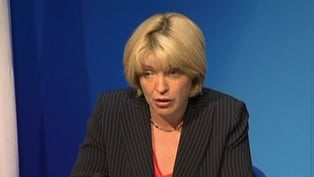
Mary Coughlan to get €225k pay-off AND €104k a year in pension payments
SHE may have been a loser in the election but outgoing Tanaiste Mary Coughlan is a winner in the money stakes.
An investigation into the the Frosses woman’s entitlements shows she will walk away with a massive financial package including a huge pension after her 24 years in the Dail.
In just five years time Coughlan, 45, will be able to pick up an incredible combined Ministerial and TD’s pension of €103,524 a year – for the rest of her life.
But that’s not the end of the gravy train for the former Agriculture and Education Minister.
She will also get a TAX-FREE pension lump sum of €147,636.
And under the termination of her Government status, the Fianna Fail politician will also get another €78,000 in various payments over the next year.
http://www.donegaldaily.com/2011/02/28/coughlans-gold-plated-e225k-pay-off-and-pension-plan-revealed/
Disgusting.
Who really won and lost this election, it certainly wasnt the Irish people.
Monday, February 21, 2011
Conspiracy against Sinn Féin ?
I won’t for one minute claim to be a Sinn Féin supporter; in fact there are several things I disagree with in regards to them. However they are the only major party to be standing up for the people of Ireland and for that reason they will get my support at the coming general election.
Recently I have begun to notice how in my opinion there seems to be a massive attack against the party from all areas, including the media, the press, opposition parties and I now believe the opinion polls.
In all reality we know that Sinn Féin will not win the general election, but a good strong Sinn Féin in opposition could do a lot of damage to the next government and be a stronger voice for the Irish people. Is this something the establishment are afraid off; is there a conspiracy against Sinn Féin to stop them becoming that threat?
Let’s start here on P.ie, there are several pathetic posts attacking Sinn Féin, including threads in relation to Sinn Féin and Gaddaffi etc. Why these posts are even started? What are these posters afraid off, do they think Sinn Féin will win the election and turn Ireland into an outpost of the Middle East?
Opposition parties especially Fianna Fail spent most of the debating tome they had the other week attacking Sinn Féin, WHY? They all consider Sinn Féin to be a small party with no influence especially if you look at the latest opinion polls.
Opinion Polls, showing Sinn Féin are losing support not gaining, yet if you look at the Boards.ie polls Sinn Féin are doing fairly well, the people I speak to say they are voting Sinn Féin for similar reasons to me and lack of choice and vision from the 3 other main parties.
Media, TV stations like TV3, TG4 and even RTE give no time for Sinn Féin, in the recent leaders debates the 3 TV stations considered the leader of Fianna Fail to actually have a chance of leading the country! Everyone knows Fianna Fail have no chance at all and yet the media including the press continue to give the 3 main parties all the coverage leaving aside parties such as Sinn Féin.
I actually believe Sinn Féin will do far better than expected in the upcoming election, but I feel this will be in spite of a massive conspiracy to try to reduce support for the party.
In summary, if Labour, Fine Gael or Fianna Fail wanted to put the people first then they would have. The only major party to do this are Sinn Féin and yet they are the ones receiving all the negative press.
Tuesday, February 15, 2011
FACT OR FICTION: whats the real story on letting the banks collapse?
I am fast becoming tired of the old story about the banks.
Fine Gael, Fianna Fail, Labour and the Green party keep throwing out the same old rhetoric about had we let the bank’s collapse or even if we do let them collapse now or in the foreseable future, we wouldn’t be able to pay Doctors or Nurses, Teachers or Gardai. Business would collapse and ATM`s would shut down.
Everything these party’s speak describe a doomsday scenario.
But how far from the truth are we here? Would this actually have happened and would it happen now?
In my opinion the whole idea of bank collapse is fiction, we were told by Fianna Fail not too long ago that the state had enough funds to last us for 2011 and we didn’t need any bailout. We were told we didn’t need any more money from bond markets and we were in good shape.
Ireland had a National Pension Reserve fund of around 20 Billion, this was more than enough cash to plug the hole in our finances for one year, so had we let the banks go we would not have seen wages for Doctor`s, Gardai etc go unpaid.
We would have in fact been in a position where we could have taken the Sinn Fein approach and taken the banks into full state control. We then could have told all the bond holders and people who had debts with the banks that they banks were now in administration and the only guarantee we would honour would be personal bank accounts of Irish citizens up to €100,000.
The banks would then be in a position to continue trading whilst agreeing a debt repayment scheme with its debtors as any administration of a business would normally exist.
Even if we did as Sinn Fein want to do now and end the states affair with the banks I see no reason as to why the doomsday scenario portrayed by the other political parties would exist.
We would simple split state debt from bank debt. We could then work with the people of this country from top down and cut the deficit whilst attracting new business into the country for jobs. Any financial gaps we would have could be plugged by returning to the bond markets with a display of cutting the sovereign debt of the nation with real ideas and fairness whilst cutting all ties with bank debts, this would encourage a positive effect with the bondholders and show them Ireland was getting its house in order without the stranglehold of tens of Billions of banking debt around our necks.
The situation should be that whilst this state is in the mess it is no TD should take a salary above the national industrial wage of €40,000. Its thinking outside the box like this that this country needs and not deflationary ideas such as cutting the poorest people in society as Labour, Fine Gael and Fianna fail wish too.
Finally to summarise I wish to make one final point.
We are told that the debts of Ireland as they exist today will cost every man woman and child around €60,000. Imagine instead that we handed every man woman and child €60,000 in cash instead of bailing out banks, imagine the stimulus this country would have had. Would we even care about banks collapsing if this was the option we could have had?
http://www.politics.ie/economy/152323-fact-fiction-whats-real-story-letting-banks-collapse.html
Fine Gael, Fianna Fail, Labour and the Green party keep throwing out the same old rhetoric about had we let the bank’s collapse or even if we do let them collapse now or in the foreseable future, we wouldn’t be able to pay Doctors or Nurses, Teachers or Gardai. Business would collapse and ATM`s would shut down.
Everything these party’s speak describe a doomsday scenario.
But how far from the truth are we here? Would this actually have happened and would it happen now?
In my opinion the whole idea of bank collapse is fiction, we were told by Fianna Fail not too long ago that the state had enough funds to last us for 2011 and we didn’t need any bailout. We were told we didn’t need any more money from bond markets and we were in good shape.
Ireland had a National Pension Reserve fund of around 20 Billion, this was more than enough cash to plug the hole in our finances for one year, so had we let the banks go we would not have seen wages for Doctor`s, Gardai etc go unpaid.
We would have in fact been in a position where we could have taken the Sinn Fein approach and taken the banks into full state control. We then could have told all the bond holders and people who had debts with the banks that they banks were now in administration and the only guarantee we would honour would be personal bank accounts of Irish citizens up to €100,000.
The banks would then be in a position to continue trading whilst agreeing a debt repayment scheme with its debtors as any administration of a business would normally exist.
Even if we did as Sinn Fein want to do now and end the states affair with the banks I see no reason as to why the doomsday scenario portrayed by the other political parties would exist.
We would simple split state debt from bank debt. We could then work with the people of this country from top down and cut the deficit whilst attracting new business into the country for jobs. Any financial gaps we would have could be plugged by returning to the bond markets with a display of cutting the sovereign debt of the nation with real ideas and fairness whilst cutting all ties with bank debts, this would encourage a positive effect with the bondholders and show them Ireland was getting its house in order without the stranglehold of tens of Billions of banking debt around our necks.
The situation should be that whilst this state is in the mess it is no TD should take a salary above the national industrial wage of €40,000. Its thinking outside the box like this that this country needs and not deflationary ideas such as cutting the poorest people in society as Labour, Fine Gael and Fianna fail wish too.
Finally to summarise I wish to make one final point.
We are told that the debts of Ireland as they exist today will cost every man woman and child around €60,000. Imagine instead that we handed every man woman and child €60,000 in cash instead of bailing out banks, imagine the stimulus this country would have had. Would we even care about banks collapsing if this was the option we could have had?
http://www.politics.ie/economy/152323-fact-fiction-whats-real-story-letting-banks-collapse.html
Wednesday, February 9, 2011
Monday, December 6, 2010
Ireland's 'morbidly obese cats' and runaway public sector pay
The UK's highest paid public sector worker gets paid £259,999.
Ireland's highest paid public sector worker gets paid €752,568
In June this year, the UK government released the names of 171 public servants who were earning more than £150,000.
John Fingleton, the head of the Office of Fair Trading was the top earner on £259,999 with NHS chief executive David Nicholson, in second place on £255,000. Hold that figure in your head for a moment.
Public sector pay is under attack in the UK as it is in Ireland - on Friday, Eric Pickles, the local government secretary, insisted that he will no longer tolerate salaries higher than David Cameron's basic pay of £142,500.
But if the UK public sector is full of "fat cats", the Irish public sector is full of "morbidly obese cats".
Tomorrow the Irish public face the most austere budget in the nation's history and public sector pay and pensions is at last on the agenda. But it is highly unlikely there will be any cuts that see top earners taking home less than the prime minister.
So back to Fingleton's pay of £255,000. It's not like for like, but the following will give you a flavour of the runaway public sector pay in Ireland.
http://www.guardian.co.uk/business/ireland-business-blog-with-lisa-ocarroll/2010/dec/06/ireland-public-sector-fat-cats
Ireland's highest paid public sector worker gets paid €752,568
In June this year, the UK government released the names of 171 public servants who were earning more than £150,000.
John Fingleton, the head of the Office of Fair Trading was the top earner on £259,999 with NHS chief executive David Nicholson, in second place on £255,000. Hold that figure in your head for a moment.
Public sector pay is under attack in the UK as it is in Ireland - on Friday, Eric Pickles, the local government secretary, insisted that he will no longer tolerate salaries higher than David Cameron's basic pay of £142,500.
But if the UK public sector is full of "fat cats", the Irish public sector is full of "morbidly obese cats".
Tomorrow the Irish public face the most austere budget in the nation's history and public sector pay and pensions is at last on the agenda. But it is highly unlikely there will be any cuts that see top earners taking home less than the prime minister.
So back to Fingleton's pay of £255,000. It's not like for like, but the following will give you a flavour of the runaway public sector pay in Ireland.
http://www.guardian.co.uk/business/ireland-business-blog-with-lisa-ocarroll/2010/dec/06/ireland-public-sector-fat-cats
Monday, November 29, 2010
Schools' work experience programme extended
Schools will be able to employ teachers and other staff without paying them as part of a FÁS work experience Slave Labour programme that has been extended today.
Under the Work Placement Programme, schools will be able to employ for up to 40 hours a week and for up to nine months people who are currently unemployed.
Tánaiste and Minister for Education Mary Coughlan said the move would help unemployed people keep their skills up and gain valuable work experience.
Anyone brought in under the work experience scheme cannot displace another staff member and cannot fill a vacant post.
Schools may use the Work Placement Programme to engage teachers as well as non-teaching graduates and non-graduates.
The announcement comes after the Department of Education on Friday announced a freeze on the filling of vacant permanent teaching posts.
On Friday, the department also instructed schools to cut the pay of secretaries and other ancillary staff by 5%.
http://www.rte.ie/news/2010/1129/education.html
Government Statement on the announcement of joint EU - IMF Programme
Government Statement on the announcement of joint EU - IMF Programme for Ireland.
The Government today agreed in principle to the provision of €85 billion of financial support to Ireland by Member States of the European Union through the European Financial Stability Fund (EFSF) and the European Financial Stability Mechanism; bilateral loans from the UK, Sweden and Denmark; and the International Monetary Fund's (IMF) Extended Fund Facility (EFF) on the basis of specified conditions.
The State's contribution to the €85 billion facility will be €17.5 billion, which will come from the National Pension Reserve Fund (NPRF) and other domestic cash resources. This means that the extent of the external assistance will be reduced to €67.5 billion.
The purpose of the external financial support is to return our economy to sustainable growth and to ensure that we have a properly functioning healthy banking system.
The external support will be broken down as follows: €22.5 billion from the European Financial Stability Mechanism (EFSM); €22.5 billion from the International Monetary Fund (IMF); and €22.5 billion from the European Financial Stability Fund (EFSF) and bilateral loans. The bilateral loans will be subject to the same conditionality as provided by the programme.
The facility will include up to €35 billion to support the banking system; €10 billion for the immediate recapitalisation and the remaining €25 billion will be provided on a contingency basis. Up to €50 billion to cover the financing of the State. The funds in the facility will be drawn down as necessary, although the amount will depend on the capital requirements of the financial system and NTMA bond issuances during the programme period.
If drawn down in total today, the combined annual average interest rate would be of the order of 5.8% per annum. The rate will vary according to the timing of the drawdown and market conditions.
The assistance of our EU partners and the IMF has been required because of the present high yields on Irish bonds, which have curtailed the State's ability to borrow.
Without this external support, the State would not be able to raise the funds required to pay for key public services for our citizens and to provide a functioning banking system to support economic activity. This support is also needed to safeguard financial stability in the euro area and the EU as a whole.
Programme for Support
The Programme for Support has been agreed with the EU Commission and the International Monetary Fund, in liaison with the European Central Bank. The Programme builds on the bank rescue policies that have been implemented by the Irish Government over the past two and a half years and on the recently announced National Recovery Plan.
The Programme lays out a detailed timetable for the implementation of the measures contained in the National Recovery Plan.
The conditions governing the Programme will be set out in the Memorandum of Understanding and the Government will work closely with the various bodies to ensure that these conditions are met. The funding will be provided in quarterly tranches on the achievement of agreed quarterly targets.
The Programme has two parts - the first part deals with bank restructuring and reorganisation and the second part deals with fiscal policy and structural reform.
The requirement for quarterly progress reports covers both parts of the programme. When the documentation on the Programme is finalised, it will be laid before the Houses of the Oireachtas.
Bank Restructuring and Reorganisation
The Programme for the Recovery of the Banking System will be an intensification of the measures already adopted by the Government. The programme provides for a fundamental downsizing and reorganisation of the banking sector so it is proportionate to the size of the economy. It will be capitalised to the highest international standards, and in a position to return to normal market sources of funding.
Fiscal Policy and Structural Reform
The Ecofin has acknowledged the EU Commission's analysis that a further year may be required to achieve the 3% deficit target. This analysis is based on a more cautious growth outlook in 2011 and 2012 and the need to service the cost of additional bank recapitalisations envisaged under the programme.
The Council has today extended the time frame by 1 year to 2015.
The Programme endorses the Irish Government's budgetary adjustment Plan of €15 billion over the next four years, and the commitment for a substantial €6 billion frontloading of this plan in 2011.
The details of the Programme closely reflects the key objectives set out in the National Recovery Plan published last week.
The adjustment will be made up of €10 billion in expenditure savings and €5 billion in taxes.
The Programme endorses the structural reforms contained in the Plan which will underpin a return to sustainable economic growth over the coming years.
The Government welcomes the support shown to Ireland by our Eurozone partners and in particular by the United Kingdom, Sweden and Denmark who have expressed their willingness to offer bilateral assistance.
The Government also welcomes the assistance of the IMF.
As part of the Programme, Ireland will discontinue its financial assistance to the Loan Facility to Greece. This commitment would have amounted to approximately €1 billion up to the period to mid-2013.
The Government today agreed in principle to the provision of €85 billion of financial support to Ireland by Member States of the European Union through the European Financial Stability Fund (EFSF) and the European Financial Stability Mechanism; bilateral loans from the UK, Sweden and Denmark; and the International Monetary Fund's (IMF) Extended Fund Facility (EFF) on the basis of specified conditions.
The State's contribution to the €85 billion facility will be €17.5 billion, which will come from the National Pension Reserve Fund (NPRF) and other domestic cash resources. This means that the extent of the external assistance will be reduced to €67.5 billion.
The purpose of the external financial support is to return our economy to sustainable growth and to ensure that we have a properly functioning healthy banking system.
The external support will be broken down as follows: €22.5 billion from the European Financial Stability Mechanism (EFSM); €22.5 billion from the International Monetary Fund (IMF); and €22.5 billion from the European Financial Stability Fund (EFSF) and bilateral loans. The bilateral loans will be subject to the same conditionality as provided by the programme.
The facility will include up to €35 billion to support the banking system; €10 billion for the immediate recapitalisation and the remaining €25 billion will be provided on a contingency basis. Up to €50 billion to cover the financing of the State. The funds in the facility will be drawn down as necessary, although the amount will depend on the capital requirements of the financial system and NTMA bond issuances during the programme period.
If drawn down in total today, the combined annual average interest rate would be of the order of 5.8% per annum. The rate will vary according to the timing of the drawdown and market conditions.
The assistance of our EU partners and the IMF has been required because of the present high yields on Irish bonds, which have curtailed the State's ability to borrow.
Without this external support, the State would not be able to raise the funds required to pay for key public services for our citizens and to provide a functioning banking system to support economic activity. This support is also needed to safeguard financial stability in the euro area and the EU as a whole.
Programme for Support
The Programme for Support has been agreed with the EU Commission and the International Monetary Fund, in liaison with the European Central Bank. The Programme builds on the bank rescue policies that have been implemented by the Irish Government over the past two and a half years and on the recently announced National Recovery Plan.
The Programme lays out a detailed timetable for the implementation of the measures contained in the National Recovery Plan.
The conditions governing the Programme will be set out in the Memorandum of Understanding and the Government will work closely with the various bodies to ensure that these conditions are met. The funding will be provided in quarterly tranches on the achievement of agreed quarterly targets.
The Programme has two parts - the first part deals with bank restructuring and reorganisation and the second part deals with fiscal policy and structural reform.
The requirement for quarterly progress reports covers both parts of the programme. When the documentation on the Programme is finalised, it will be laid before the Houses of the Oireachtas.
Bank Restructuring and Reorganisation
The Programme for the Recovery of the Banking System will be an intensification of the measures already adopted by the Government. The programme provides for a fundamental downsizing and reorganisation of the banking sector so it is proportionate to the size of the economy. It will be capitalised to the highest international standards, and in a position to return to normal market sources of funding.
Fiscal Policy and Structural Reform
The Ecofin has acknowledged the EU Commission's analysis that a further year may be required to achieve the 3% deficit target. This analysis is based on a more cautious growth outlook in 2011 and 2012 and the need to service the cost of additional bank recapitalisations envisaged under the programme.
The Council has today extended the time frame by 1 year to 2015.
The Programme endorses the Irish Government's budgetary adjustment Plan of €15 billion over the next four years, and the commitment for a substantial €6 billion frontloading of this plan in 2011.
The details of the Programme closely reflects the key objectives set out in the National Recovery Plan published last week.
The adjustment will be made up of €10 billion in expenditure savings and €5 billion in taxes.
The Programme endorses the structural reforms contained in the Plan which will underpin a return to sustainable economic growth over the coming years.
The Government welcomes the support shown to Ireland by our Eurozone partners and in particular by the United Kingdom, Sweden and Denmark who have expressed their willingness to offer bilateral assistance.
The Government also welcomes the assistance of the IMF.
As part of the Programme, Ireland will discontinue its financial assistance to the Loan Facility to Greece. This commitment would have amounted to approximately €1 billion up to the period to mid-2013.
http://www.rte.ie/news/2010/1128/govtstatement.html
Subscribe to:
Posts (Atom)